Why We Started Writing Open Notes on Charge Trap Flash
A regional seminar, a shared sandwich table, and a habit of trading lab notebooks—how a small volunteer group began publishing what it learns about nitride traps and retention.

The first notes were not meant for anyone outside the room. In the fall of 2009, a handful of memory engineers left a regional seminar in Monterey with the same complaint: the most useful conversations had happened in the hallway, not on the slides. One of them, a process engineer named Aude, had a spiral notebook full of retention measurements from a TANOS stack she had been cycling for weeks. Another had a sketch of a sealing layer experiment that never made it into a talk. By the time the coffee ran out, they had agreed to photocopy their notes and mail them around. That habit grew into the open notes we publish today, and it still shapes how we run a monthly online seminar, where the same hallway spirit applies.
A notebook passed across a table
The seminar that started it was a regional meeting on nonvolatile memory, held in a hotel conference room with bad acoustics and good coffee. Aude Rothschild, who worked on nitride trapping layers at the time, remembers sitting through a talk on TANOS retention and realizing that the speaker had struggled with the same window instability she had seen in her own cycling data. She found him at the break and asked how he had handled the drift. He pulled out a folded printout. She pulled out her notebook. Within ten minutes, three other people had joined the table.
What they traded that afternoon was not a formal paper. It was the raw material behind one: the bake temperatures, the flatband voltage shifts, the small annotations in the margin. That is still the tone of what we publish. We write down the steps, the tool settings where we can share them, and the places where the data got noisy. When a result looks too clean, we say so and point to the repeat run.
We were not trying to build a library. We just wanted to stop re-learning the same lesson about the sealing layer every six months.
What the notes look like now
The mailing list became a shared folder, then a blog. The format has stayed stubbornly plain: a short description of the question, a table of conditions, the measurement setup, and a paragraph on what we think it means. We keep the raw numbers where we can, though some come from tools we no longer have access to. When we compare trap layers across lots, we try to show the spread rather than one flattering curve. That habit came directly from those early photocopies.
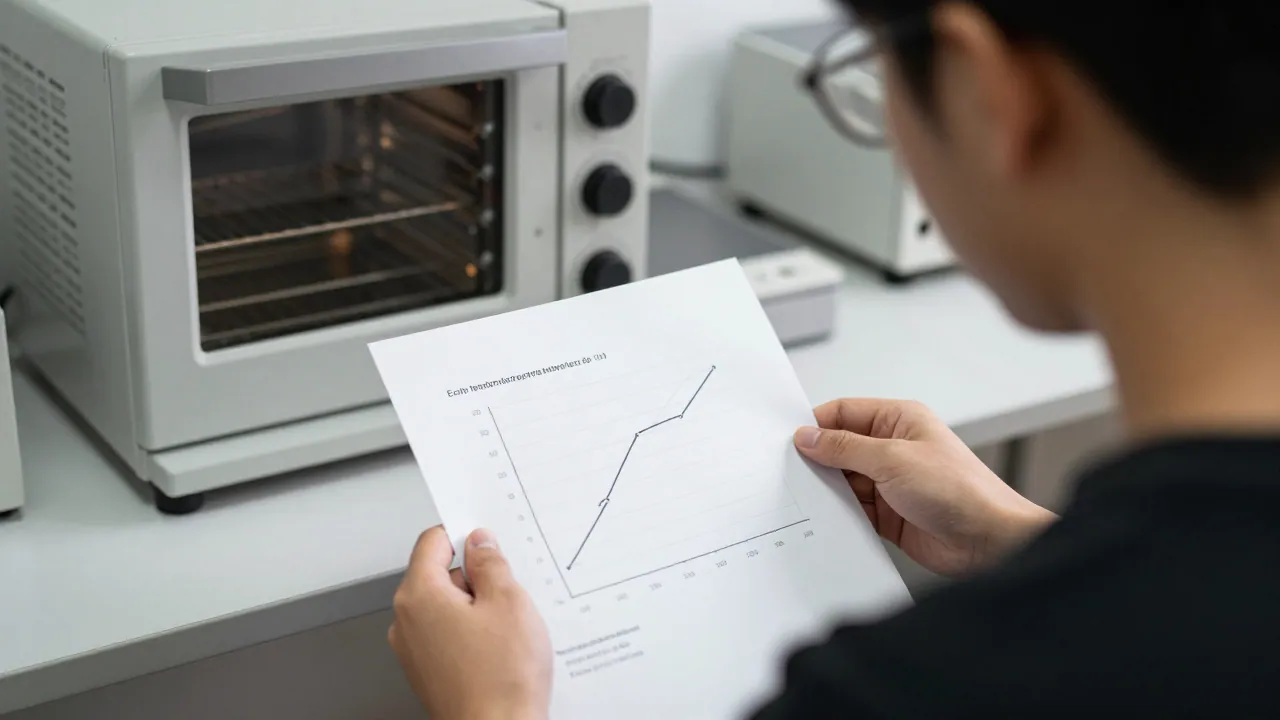
A recent example is our spring retention tests on sealing layers. Three volunteers ran the same bake schedule on samples from different lots and posted their curves side by side. The discussion that followed was more useful than any of the individual results. It also reminded us to double-check the time stamps before drawing conclusions, which is why we now have a short checklist for checking numbers twice before posting results.

Who writes them
The group is small and volunteer-run. Most of us work in process integration, device characterization, or test engineering, and we write in the evenings or on Friday afternoons when the lab is quiet. Students join through the seminar series and often take on a single question: how a nitride layer behaves after a high-temperature step, or why a retention curve bends the way it does. We do not ask for credentials. We ask for the measurement conditions and an honest note about what went wrong.
- A process engineer keeps a log of etch damage seen on metal gates after high-k processing.
- A device engineer tracks program and erase window drift across cycling runs.
- A student volunteer maintains the reading list and flags papers that deserve a second pass.
- A retired test engineer reviews bake schedules before they go into a post.
That mix is deliberate. The people closest to the tool often see the failure first, and the people furthest from it ask the question that breaks the assumption. When we published our notes on reading retention curves from nitride trap energy depth, a student asked why we had not plotted the low-field points separately. The answer was that we had not thought of it. The next version of the note did.
Why we keep publishing
There is no commercial reason behind these notes. We are not selling a process or a stack. The reason is simpler: charge trap flash is a field where the useful details live in the margins, and those details disappear when nobody writes them down. A retention bake that failed at 150 degrees Celsius is worth as much to the next engineer as one that succeeded, provided someone records it. Publishing openly also keeps us honest. It is harder to overstate a result when the conditions are visible to everyone.
We still meet in hallways. The monthly online seminar is an attempt to recreate that table with the notebook on it, and the reading list is an attempt to keep the slower conversations alive. Neither replaces the original habit: write it down, pass it on, and let the next person add a margin note.
If there is a lesson in this for other small groups, it is that the first step does not need to be a website. It can be a photocopy and a promise to compare notes again next season.
Questions people ask
Do I need to be a member to read the notes?
No. The notes are open to anyone who finds them useful. We do not have memberships or fees. If you want to contribute a correction or a measurement, you can write to the editors and we will review it with you.
What kinds of measurements appear in the notes?
Mostly retention bakes, program and erase window shifts, and material comparisons across lots. We include the conditions we can share, such as bake temperatures and cycling counts, and we note when a tool setting cannot be disclosed.
How can a student get involved?
Students often start by attending the monthly online seminar and asking questions. From there, a volunteer may suggest a small measurement or a literature review. We ask for care with conditions and honesty about what did not work.